
Case Study: AWF Auto Transport, Live in Under 48 Hours
How a licensed US vehicle shipping company went from zero web presence to a fully live, lead-ready website in under 48 hours, built on Next.js by LoomaDev.
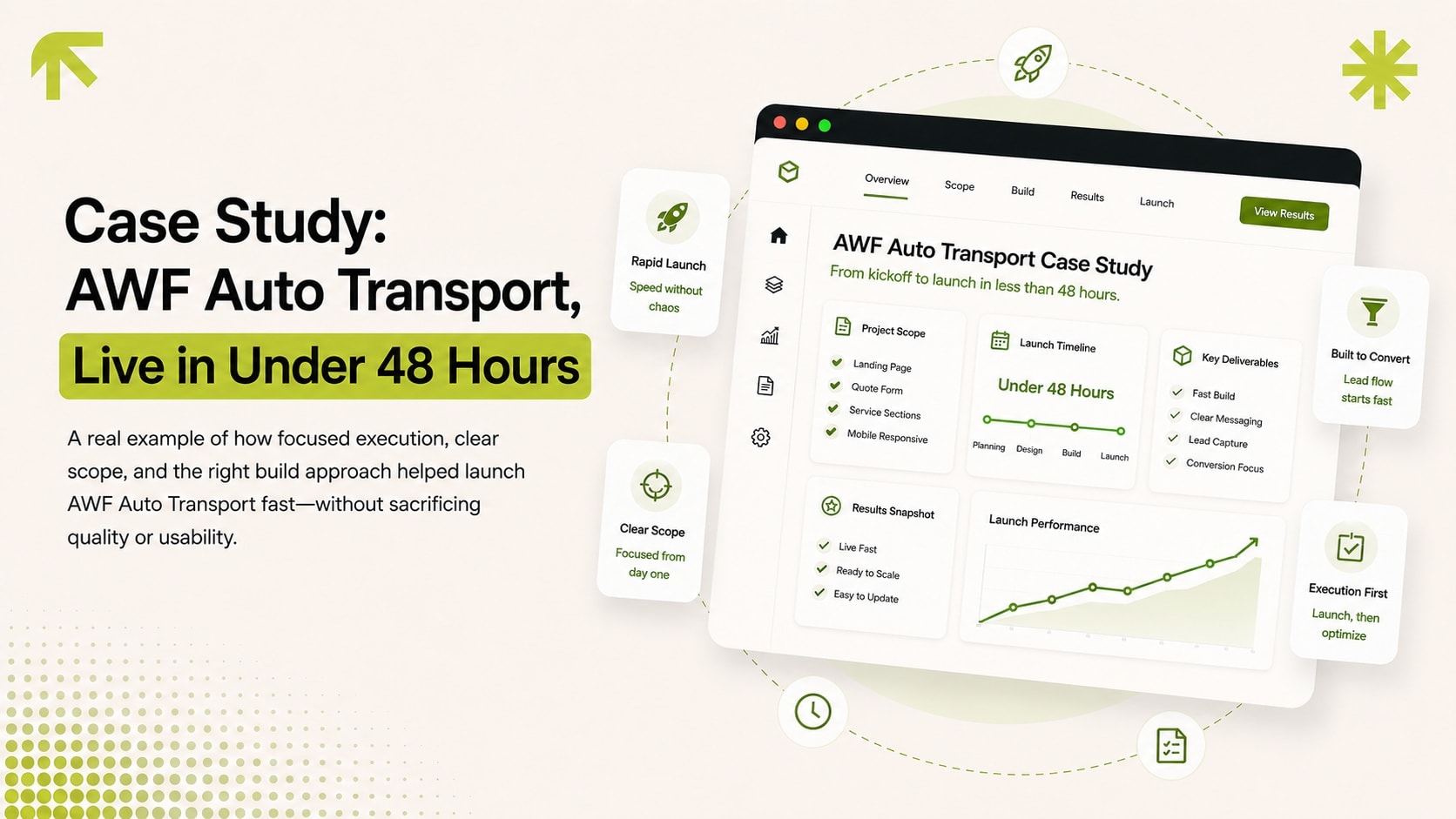
Overview
AWF Auto Transport is a licensed US vehicle shipping company that came to us with no web presence at all. No site meant no way for prospective customers to find them, learn what they do, or get a quote, and every day without one was a day of lost inbound interest for a carrier ready to take bookings.
The Problem
A licensed transport company with no website is invisible to anyone searching online, and every day without one is a day of lost inbound interest. There was no existing site to migrate or rebuild from, this was a from-scratch build under real time pressure.
The Solution
We built a complete, lead-ready marketing website using Next.js, React, and Tailwind CSS, deployed on Vercel. Scope was locked immediately: a clear explanation of AWF's services, service area, and a straightforward path for a visitor to request a quote. No unnecessary features, nothing that would slow down a 48-hour build.
The finished site covers open and enclosed transport side by side, so a customer shipping a daily driver and a customer shipping a classic or exotic car both land on the right page, plus nationwide coast-to-coast coverage messaging, a dedicated quote request flow, and a company/contact section with AWF's DOT and MC numbers displayed up front, the trust signal that matters most when a customer is about to hand an unfamiliar company the keys to their vehicle.
The Results
Full marketing website, designed, built, and deployed, live in under 48 hours from kickoff.
AWF went from zero web presence to a fully functioning, lead-ready site, with licensing and insurance details front and center for a customer's first trust check.
Key Learnings
A 48-hour timeline only works when scope is locked before development starts, the same discipline behind every build we do. There was no room to renegotiate scope mid-build, which is exactly why the first conversation matters more than the code. See our MVP scoping framework for how we approach this on every project, fast or otherwise.
Frequently Asked Questions
How is a 48-hour website build even possible?
Does a fast build mean lower quality?
What tech stack was used for AWF's site?
Can you build something this fast for my business too?
Was this a one-off, or is fast turnaround normal for your team?
Ready to Build Something
That Gets You Clients?
Free 30-minute consultation. We'll map out your project and agree on a price together. No commitment, no pressure.
Book My Free Call