
How to Read a Developer's Quote: What Every Line Item Means
What each line item in a web development quote actually means, plus real Pakistan cost ranges, so you can tell a fair quote from an inflated one.
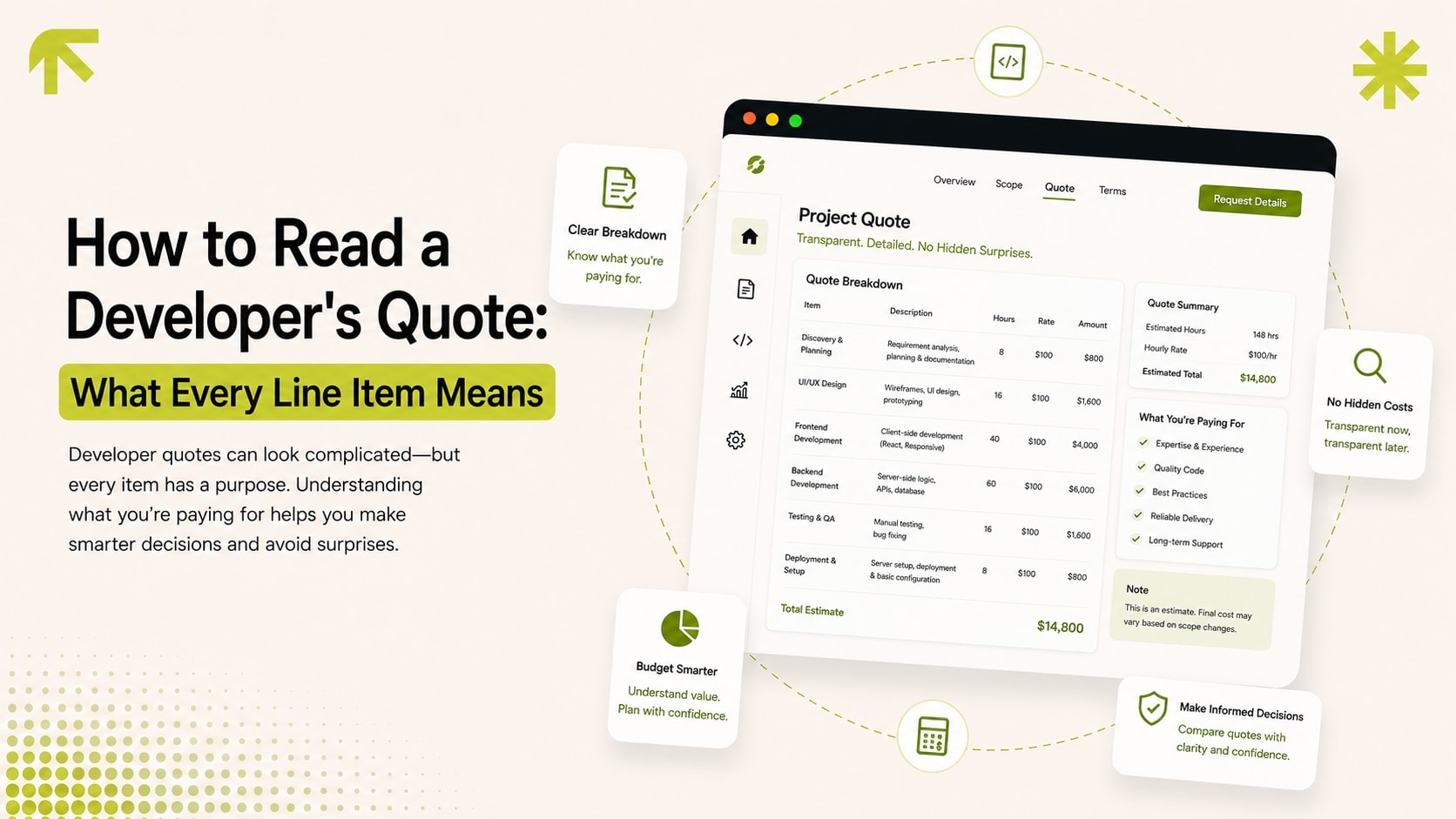
A quote full of line items looks precise, but precision isn't the same as fairness. Here's what each common line item actually covers, and what real cost ranges look like when hiring a Pakistan-based team for international clients.
What each line item usually means
Discovery / scoping. Time spent understanding your requirements before any design or code starts. Should be a small fraction of the total, not a padded line item.
Design. UI/UX design work, usually in Figma. Reasonable to be a meaningful percentage of the total for a design-heavy project, less so for a simple internal tool.
Development. The actual build. Usually the largest line item, and worth asking what specifically it covers, frontend only, or frontend plus backend plus database work.
QA / testing. Time spent testing before launch. A complete absence of this line item is a bigger red flag than its presence.
Deployment. Getting the site or app actually live on real infrastructure. Should be small unless the infrastructure itself is complex.
Contingency / buffer. A margin for the unexpected. Reasonable in moderation; a large contingency line is worth asking about directly.
Real cost ranges: hiring in Pakistan vs. a UK/US agency
A UK or US agency will typically quote 2-3x more than an offshore studio for the exact same scope, because you're also paying for their local overhead: office space, higher salaries, account management layers. For a straightforward 5-10 page marketing site, a Pakistan-based team's total often lands where a single line item might on a US quote. The gap widens further on web app and dashboard work, where account-management overhead compounds across a longer project. (See our fuller cost breakdown by project type for specific ranges.)
What actually separates a fair quote from an inflated one
It's not the number of line items, it's whether each one is tied to something you can picture actually happening. "Development: $8,000" with no further breakdown tells you nothing. "Development: $8,000, covering the customer-facing site plus an admin dashboard for order management" tells you exactly what you're paying for. Ask for that level of specificity on any quote before comparing numbers.
An illustrative example, side by side
These figures are illustrative, not a real client's invoice, but the shape is realistic for a mid-sized web app build:
Vague version: "Discovery: $500. Design: $1,500. Development: $9,000. Deployment: $500. Total: $11,500."
Specific version: "Discovery (requirements, one core workflow defined): $500. Design (8 screens in Figma, one revision round): $1,500. Development (customer-facing ordering flow plus an admin dashboard with order and menu management): $9,000. Deployment (production hosting setup, domain configuration): $500. Total: $11,500."
Same total, same line items, but only the second version lets you actually check whether the scope matches what you asked for. If a quote can't be rewritten this way when you ask, that's worth treating as a real answer, not a formality to skip.
This is the same reasoning behind how we scope and price work ourselves, not a rigid line-item calculator, but an honest conversation about what you actually need. See how we price web development projects for the full process.
Frequently Asked Questions
Is a quote with more line items always more trustworthy?
What's a reasonable contingency percentage on a quote?
Why do Pakistan-based agencies quote so much less than UK/US ones?
Should I be worried if QA/testing isn't on the quote at all?
How do I compare quotes from agencies with totally different formats?
Ready to Build Something
That Gets You Clients?
Free 30-minute consultation. We'll map out your project and agree on a price together. No commitment, no pressure.
Book My Free Call