
How We Price Web Development Projects (No Formal Bidding Process)
No RFPs, no templated quote generators. Here's how Loomadev actually prices a project, a direct conversation, an agreed number, then an invoice.
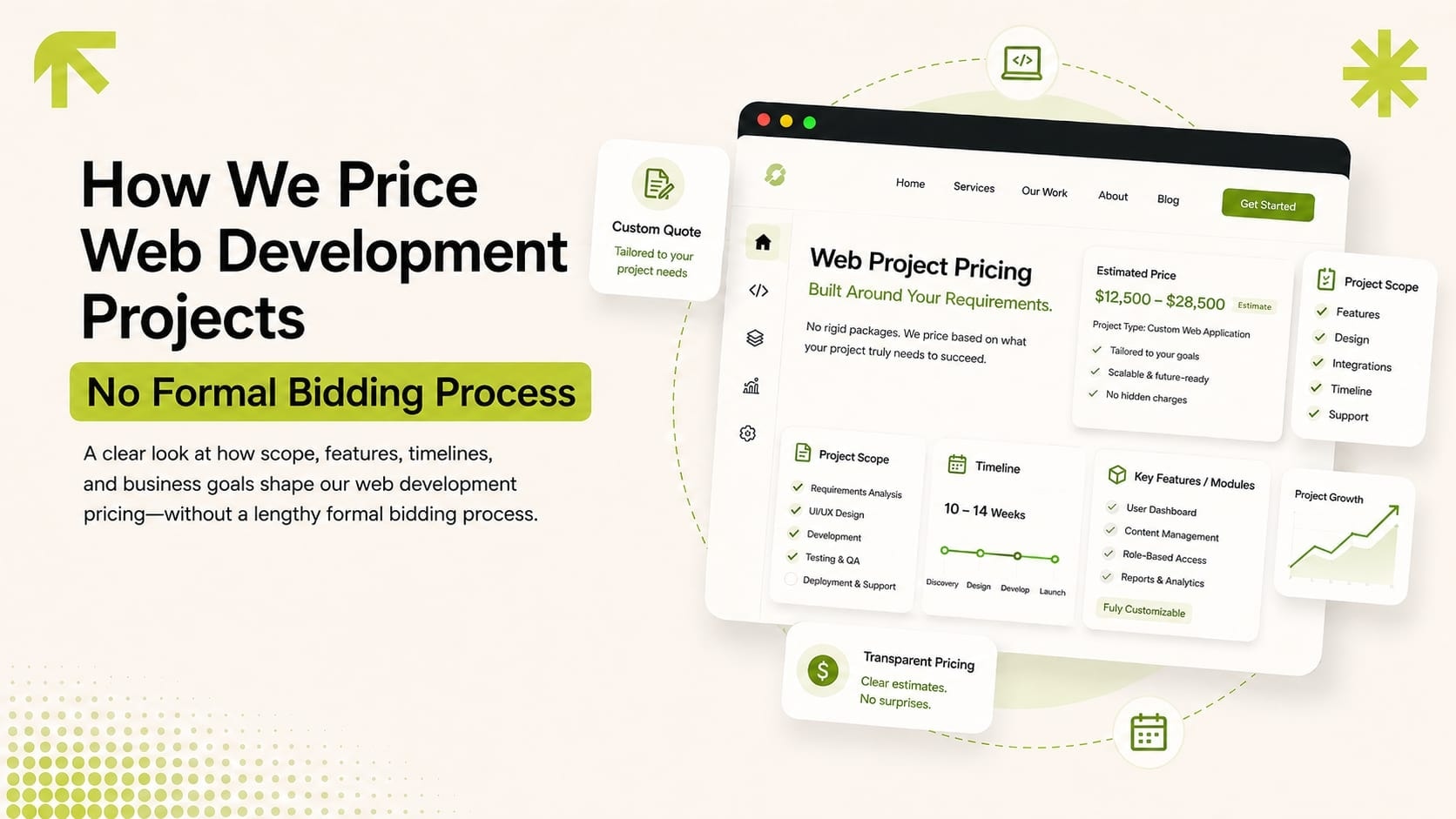
Most agencies run you through a process before you ever see a number: fill out an intake form, wait for a "custom quote," sometimes wait days for a proposal to come back from someone who never talks to the person who'll actually build it. By the time you have a price, you've spent more time on the bidding process than some small projects take to build. (If you want a general sense of ranges first, see how much a custom website typically costs.)
We don't do that. We talk through what you actually need, agree on a price together, and invoice for it.
Why a direct conversation beats a formal bidding process
A templated quote process is built to protect the agency's margin, not to reflect your actual situation. It outputs roughly the same number regardless of whether your budget is tight, whether the work can be phased, or whether part of what you asked for isn't actually essential to get you live. A direct conversation does the opposite, because you're negotiating with the person who'll actually build it, not a sales rep relaying a form to a project manager. The price can flex to fit reality: what if we cut this feature for v1? What if we phase the redesign instead of doing it all at once? That conversation doesn't happen inside a rigid RFP process.
What actually happens
We talk through the project. What you're building, your timeline, and your budget range if you have one.
We agree on a price together. Based on that conversation, not a generic line-item calculator. If budget's tight, we'll tell you what we'd cut or phase to make the number work, rather than quoting the "full" version and leaving you to walk away.
We put the agreed scope in writing before anything starts, so both sides know exactly what that number covers.
We invoice, typically split across a deposit and delivery, or in phases for larger projects, rather than 100% upfront to someone you've never worked with before.
What this protects you from
No "that wasn't included" surprises. The scope is written down right after we agree on the number, not buried in fine print from a templated quote.
No open-ended hourly clock. You know the number before work starts, the same certainty a fixed bid gives you, just arrived at through an actual conversation instead of a rigid formula.
No sales-rep telephone game. You're negotiating directly with the person who'll build your project, so nothing gets lost in translation between what you asked for and what gets built.
If you want to add something mid-project
We'll tell you what it adds to the number before we start on it. You decide whether it's worth doing now or worth saving for a phase two.
This same direct approach is how AWF Auto Transport went from no web presence to a fully live site in under 48 hours: a quick conversation, an agreed price, then straight into the build. If you're still deciding whether to hire an agency at all, offshore or otherwise, see our guide to vetting one first. Otherwise, let's talk through your project.
Red flags in how any agency prices your project
They quote a number before ever asking about your actual goals or constraints.
You never talk to the person who'll build it before the price is set.
No written scope after the number is agreed, just a verbal figure and a hope it covers everything.
No ownership clause, leaving your code and assets in a legal grey zone.
Frequently Asked Questions
Do I get a number before I commit to anything?
Is this basically a fixed price, just informal?
Do I own the code after the project is finished?
What happens if I want to cancel partway through a project?
Do you require a deposit before starting work?
Ready to Build Something
That Gets You Clients?
Free 30-minute consultation. We'll map out your project and agree on a price together. No commitment, no pressure.
Book My Free Call