
Signs Your Software Project Is About to Fail
The early warning signs a software project is heading off track, and practical ways to course-correct before it becomes a bigger problem.
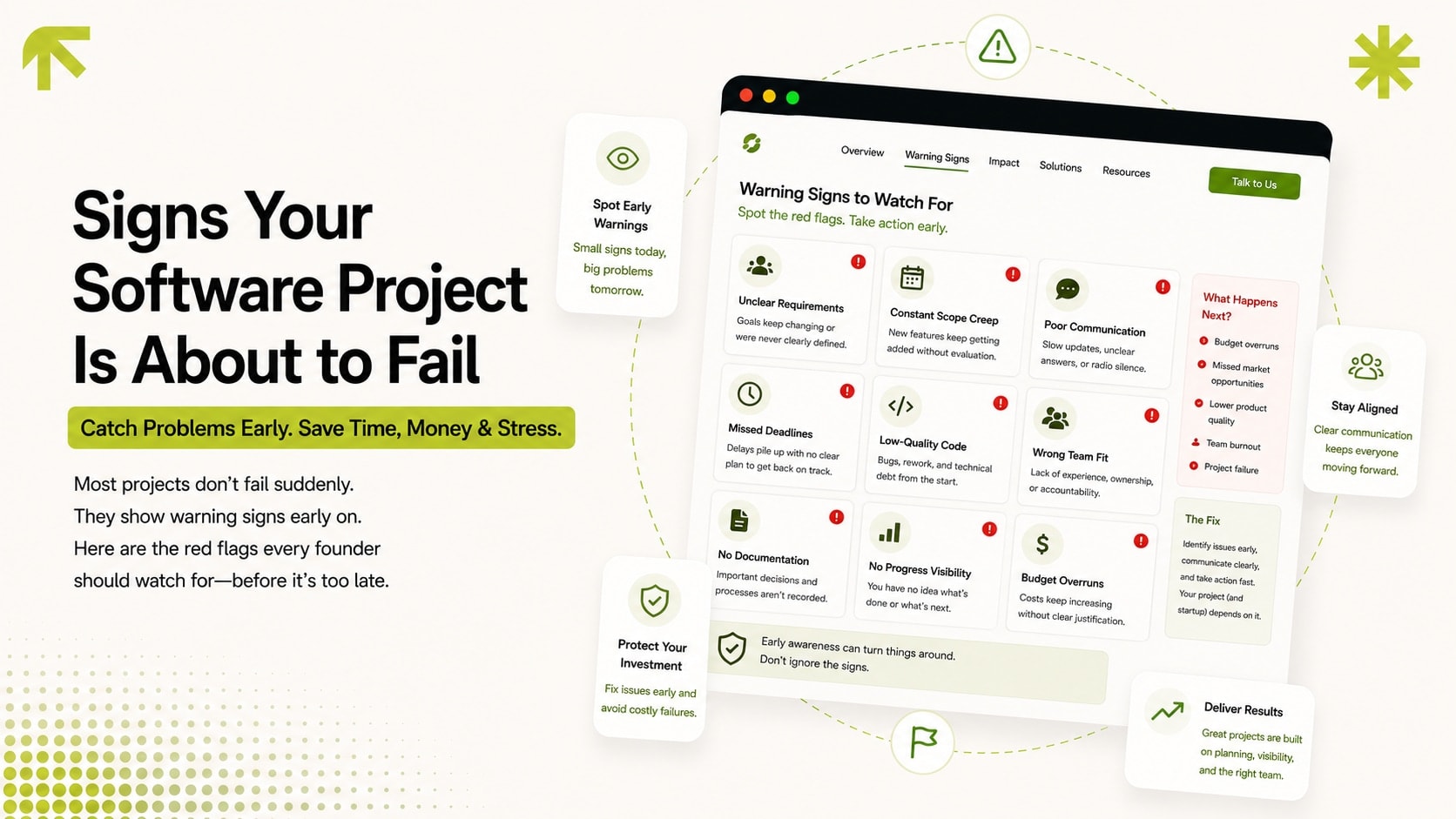
Most failed software projects don't fail suddenly. They drift for weeks while everyone involved hopes it'll come together. Here are the early signs worth acting on immediately, not explaining away.
1. Scope keeps growing without anyone writing it down
A small addition here, a "quick change" there, none individually alarming, but if nobody is tracking how the scope has shifted from what was originally agreed, the project is quietly becoming a different, bigger project than the one that was priced and timed.
2. There's no working demo by the midpoint
By roughly the halfway mark, there should be something real to look at, even if incomplete. If all you have is a promise that "it's coming together," that's worth a direct conversation, not patience.
3. The founder or client can't answer basic product questions
If the person driving the project can't clearly answer who the first users are or what the core workflow is, that uncertainty gets built into the product. A stalling project often reflects an unclear product, not a slow developer.
4. Communication has gone quiet
Regular updates turning into radio silence is one of the most reliable warning signs in remote or offshore work specifically. A team that's on track has no reason to go quiet; a team avoiding a hard conversation often does.
5. Every conversation ends with "just one more week"
One slipped deadline happens. A pattern of slipped deadlines, each with a confident new date, usually means the underlying estimate was wrong from the start, not that this particular week was unlucky.
How to course-correct
Get the current scope in writing, compared explicitly against what was originally agreed. The gap itself tells you what happened.
Ask for a working demo of whatever exists today, not a description of what's planned.
Re-scope down to the smallest workable version, the same discipline behind a well-run MVP from day one.
This is exactly why we treat scoping as the most important conversation on any project, not a formality before the "real work" starts. See the MVP scoping questions we ask before any project starts for how we try to prevent this from the outset.
What we actually watch for on our own projects
On every build, we treat the midpoint check-in as non-negotiable, not a courtesy update. If there's nothing real to show by then, that's a signal to us before it's a signal to the client, and it's exactly why we scope tightly enough up front that a midpoint demo is realistic in the first place. A project with no visible progress by its midpoint almost always traces back to scope that was never actually locked down, which is the same root cause behind most of the warning signs above.
Frequently Asked Questions
What's the single earliest warning sign to watch for?
Is it normal for a software project to slip its deadline once?
What should I do if my current project shows these signs?
Can a failing project actually be saved?
How does Loomadev avoid this on its own projects?
Ready to Build Something
That Gets You Clients?
Free 30-minute consultation. We'll map out your project and agree on a price together. No commitment, no pressure.
Book My Free Call