
Technical SEO Checklist for Startup Websites (2026)
A practical technical SEO checklist for startup websites — schema, crawlability, Core Web Vitals, and the fixes that actually move the needle.
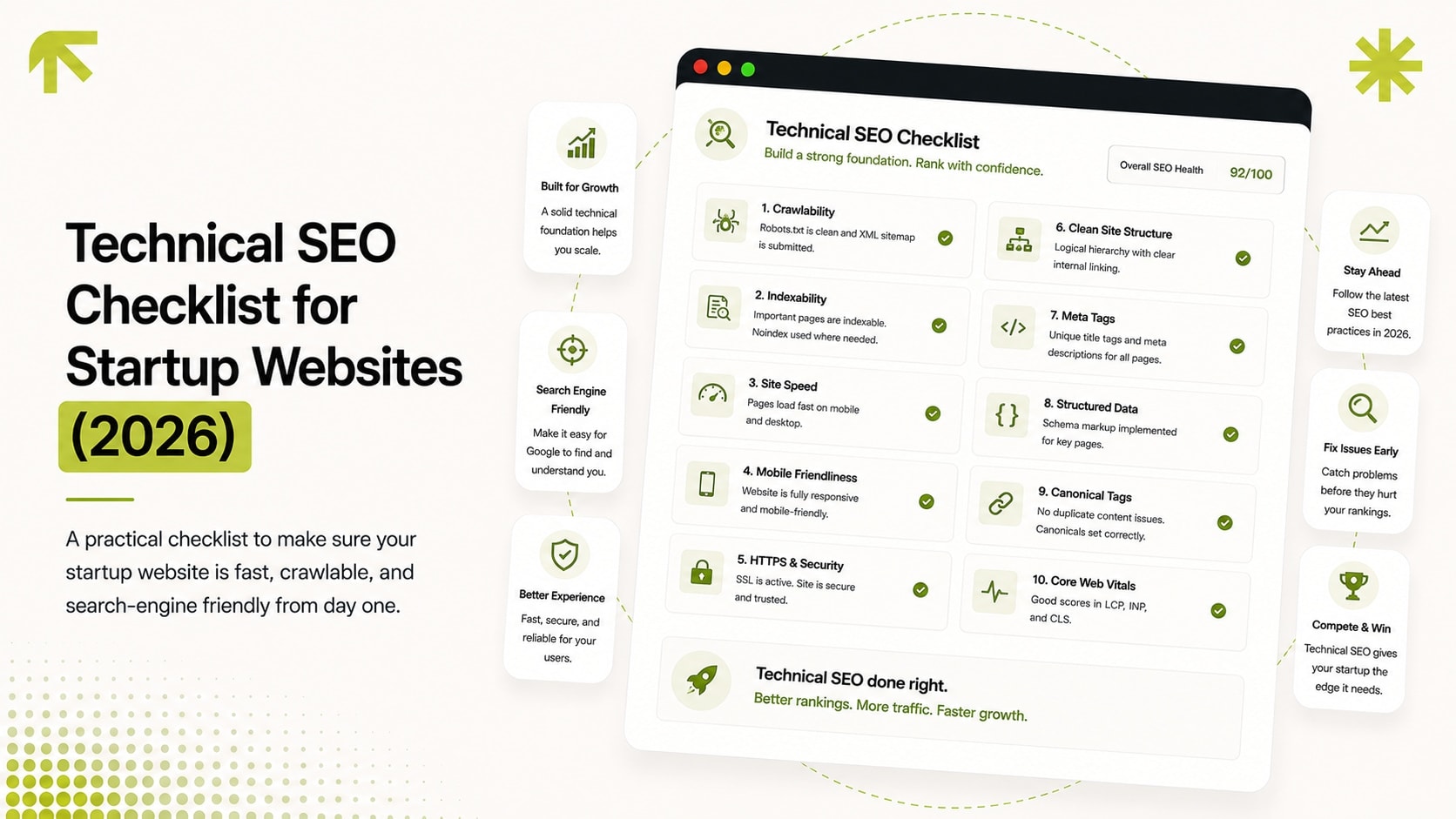
Most startup websites don't have a keyword problem before they have a technical one. Before writing more content, it's worth confirming these basics are actually in place. Most of them are one-time fixes, not ongoing work.
1. Is your sitemap actually current?
A sitemap generated once at launch and never updated means new pages (blog posts, product pages) can take far longer to get discovered and indexed. A dynamic sitemap that queries your actual content at request time, rather than a static file from launch day, fixes this permanently.
2. Does your site have structured data (schema markup)?
Schema.org markup (Organization, LocalBusiness, BlogPosting, BreadcrumbList, FAQPage, depending on the page type) helps search engines, and increasingly AI answer engines like ChatGPT and Perplexity, understand what a page actually is and who's behind it, rather than inferring it from unstructured text. This is one of the highest-leverage, lowest-effort fixes available: implement once, benefits every page of that type going forward. It's part of what we set up on projects like Connect People's platform rebuild.
3. Are your Core Web Vitals actually passing?
Check against your real, live pages, not a staging environment. Slow Largest Contentful Paint or high layout shift is both a ranking factor and a direct conversion killer; visitors bounce before slow pages finish loading.
4. Is there a real content-security policy and are your security headers set?
Increasingly relevant for both security and crawl trust: HSTS, X-Frame-Options, and a properly scoped Content-Security-Policy. These don't directly move rankings, but a site with clean security headers signals a maintained, trustworthy property, and it protects against the kind of vulnerabilities that can get a site flagged or blocklisted. See our broader website security checklist for the non-technical version of this.
5. Can AI crawlers actually read your site?
Check your robots.txt isn't accidentally blocking GPTBot, ClaudeBot, or PerplexityBot. A growing share of discovery now happens through AI answer engines, not just traditional search. A simple llms.txt file at your domain root, summarizing what your business does and linking your key pages, is a cheap, high-value addition most sites still don't have.
6. Do your internal links actually connect your content?
Every blog post and service page should link to at least one other relevant page on the site. Isolated pages with no internal links pointing to them are harder to discover and rank worse than pages embedded in a real link structure. This is free to fix and easy to skip.
Where this fits into a broader strategy
Technical SEO is the foundation everything else sits on. Content and backlinks compound faster once the technical basics are solid, and barely move the needle if they aren't. If you want a full audit rather than a self-check against this list, that's exactly what our SEO service covers, starting with a full technical, on-page, and schema review before touching a single word of content.
Frequently Asked Questions
Do I need to fix all of this before writing any content?
How do I check if AI crawlers can access my site?
Does adding schema markup guarantee rich results in Google?
How often should a technical SEO check be repeated?
Can bad technical SEO actually get a site penalized, not just ranked lower?
Ready to Build Something
That Gets You Clients?
Free 30-minute consultation. We'll map out your project and agree on a price together. No commitment, no pressure.
Book My Free Call